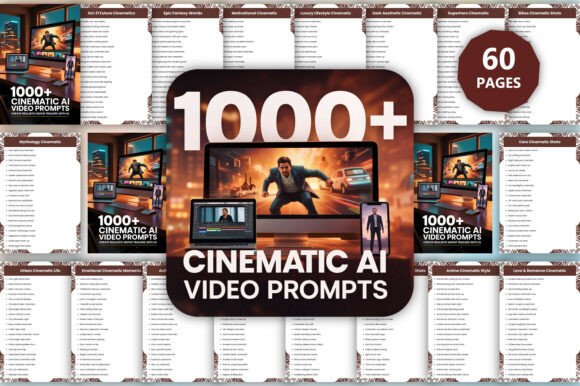
Unlock Cinematic AI Video Prompts for Professional Results
Beyond Generic Footage: Understanding the Cinematic Edge
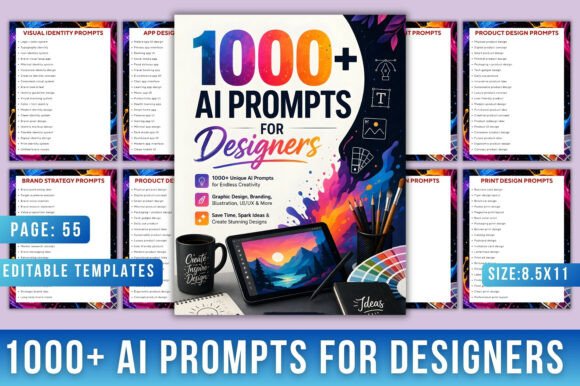
If you have spent any time generating video content with AI tools, you know the gap between a generic clip and a truly cinematic sequence is vast. It is the difference between a stock video that loops awkwardly and a scene that feels like it belongs in a feature film. This is where the 1000+ Cinematic AI Video Prompts collection steps in. It is not just a list of text strings; it is a comprehensive library of visual direction designed to bridge the gap between your creative vision and the AI’s output. For creators, filmmakers, and digital artists, this resource acts as a specialized vocabulary, teaching the AI how to handle complex modern typography of visual storytelling—lighting, composition, camera movement, and mood.
Unlike standard prompt generators that might give you "a dog running in a park," this collection focuses on the cinematic language of film. It provides the specific descriptors needed to achieve that professional film look. Think of it as a premium font for your video workflow; just as a high-quality typeface elevates a design, these prompts elevate your footage. They translate your ideas into the specific syntax that AI models understand best, allowing you to bypass the trial-and-error phase and move straight into production. Whether you are working on a brand campaign, a YouTube intro, or an experimental art piece, having a robust library of design assets like this ensures your visual identity is consistent and high-impact.
The Visual Personality: Crafting Mood and Atmosphere
The strength of the 1000+ Cinematic AI Video Prompts lies in their ability to define a scene's personality. In design terms, we often talk about the "voice" of a typeface—how a serif font conveys tradition while a sans serif font suggests modernity. Video works similarly, but it adds the dimensions of time and motion. This prompt book covers a massive spectrum of styles, from the gritty texture of a noir thriller to the ethereal glow of high-fantasy. It allows you to dictate the "typography" of your visuals: the saturation, the grain, the depth of field, and the lighting temperature.
For instance, if you are creating content for a luxury brand, you need visuals that scream elegance. The prompts in this collection guide the AI to generate scenes with soft, diffused lighting, slow-motion movements, and rich color grading—characteristics that mirror the sophistication of a high-end editorial design. Conversely, if you are marketing an action-oriented product or a gaming channel, the prompts focus on dynamic camera angles, rapid cuts, and high-contrast lighting. This control over visual personality is crucial for brand identity. Just as you wouldn't use a script font for a technical manual, you wouldn't use flat, static lighting for an adrenaline-fueled trailer. These prompts give you the precision to match the visual style to the emotional intent.
Practical Applications: From Social Media to Commercial Projects
One of the most common challenges I see with content creators is the struggle to maintain consistency across different platforms. A video that looks great on a cinema screen might lose its impact as a vertical Instagram Reel or TikTok. The 1000+ Cinematic AI Video Prompts are designed with this multi-platform reality in mind. The collection includes specific guidance for short-form content, ensuring that the composition works within a 9:16 aspect ratio without losing the cinematic feel. This is vital for social media graphics and video marketing, where capturing attention in the first three seconds is everything.
Beyond social media, consider the applications in broader creative fields:
- Logo Design and Intro Videos: Use the prompts to create animated backgrounds or reveal sequences that give your logo design a motion-graphic counterpart. A static logo is good, but a logo that emerges from a cinematic mist or a sci-fi landscape creates a memorable impression.
- Packaging Design and Mockups: If you are presenting a packaging design to a client, a static mockup is standard. However, a cinematic video showing the product in a lifestyle setting—perhaps with the moody lighting of an urban night scene or the crisp clarity of a nature documentary—adds immense value to your pitch.
- Web Design Integration: Background videos are a staple of modern web design. Instead of using generic stock footage that loads slowly and looks repetitive, you can use these prompts to generate unique, lightweight clips that match your site's brand identity perfectly.
- Editorial and Publishing: For digital publishers and bloggers, video content is no longer optional. These prompts help you create header videos or supplementary visual content that enhances your articles, much like choosing the right creative font enhances a headline.
The versatility here is the selling point. It functions like a complete font family for video, offering different "weights" and "styles" to suit any project requirement, from commercial font usage in ads to personal artistic exploration.
Integrating Prompts into Your Creative Workflow
Adopting a new tool requires a shift in workflow. When you find a premium font, you don't just install it; you test it, pair it, and see how it renders on different screens. The 1000+ Cinematic AI Video Prompts should be treated with the same rigor. Don't just copy and paste; analyze the structure. Notice how the prompts are built—usually starting with the subject, followed by the action, the camera movement, the lighting, and finally the mood or style.
Here is a practical approach to using this resource effectively:
- Define Your Narrative: Before opening the prompt book, know what story you are telling. Is it a motivational piece? A horror short? A travel vlog? This narrows down which section of the 1000+ prompts to focus on.
- Test for Readability: In typography, readability is king. In video, "visual clarity" is the equivalent. Test the prompts to ensure the AI generates scenes where the subject is clear and the background complements rather than distracts. A prompt that generates too much visual noise is like a handwritten font that is impossible to decipher—stylistically interesting but functionally flawed.
- Experiment with Pairings: Just as you might pair a serif font with a sans serif font, try combining elements from different prompts. Take the lighting instruction from a "Noir" prompt and combine it with the subject of a "Sci-Fi" prompt. This hybrid approach allows you to create a unique visual hierarchy in your video.
- Evaluate the "Texture": Pay attention to the post-processing descriptors. Words like "grain," "8k," "Unreal Engine 5," or "shallow depth of field" are the texture of your video. They add the tactile quality that makes AI footage look real rather than synthetic.
For entrepreneurs and small business owners, this resource democratizes high-end production. You no longer need a film degree or expensive software to create a commercial that looks like it cost thousands to produce. By leveraging these cinematic AI video prompts, you are essentially hiring a virtual Director of Photography who knows exactly how to light a scene for maximum emotional impact.
Achieving Professional Consistency
The ultimate goal of any brand identity is consistency. When a customer sees your content, they should recognize it immediately, regardless of the platform. This is easy with typography—you set your fonts and stick to them. It is much harder with video, where variables like lighting and movement can change drastically from clip to clip. This is where the 1000+ Cinematic AI Video Prompts provide a strategic advantage.
By using a consistent set of prompt styles—perhaps always specifying "golden hour lighting" or "anamorphic lens flare"—you create a cohesive visual thread across all your content. This consistency builds trust and professionalism. It tells your audience that you care about the details. Whether you are a designer building a portfolio, a marketer launching a campaign, or a hobbyist creating a passion project, the ability to generate consistent, high-quality footage is a game-changer. It transforms AI video generation from a novelty into a reliable component of your creative toolkit, ensuring that every frame you produce aligns with the high standards of your design assets and overall creative vision.