Hadney Buddy: The Retro Display Font for Modern Projects
There's a particular warmth to vintage design that modern, minimalist fonts sometimes struggle to capture. It's a feeling of nostalgia, of playful confidence, and of unapologetic personality. This is the exact territory where Hadney Buddy excels. It’s not just a typeface; it's a toolkit for injecting a distinct retro vibe into your work, but with the flexibility needed for today's diverse design landscape. As a premium font, it offers a layered approach that moves beyond simple text, giving you the components to build something truly dynamic.
The Anatomy of a Funky Typeface
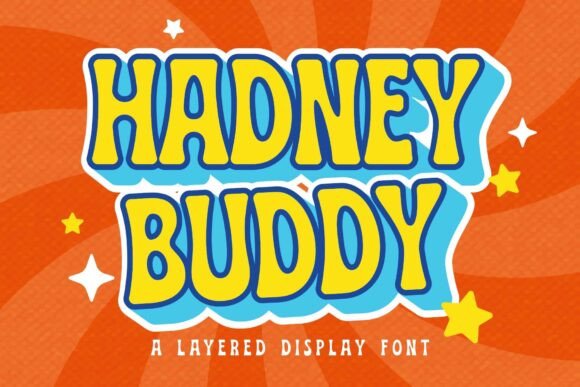
At its core, Hadney Buddy is a bold, curvy display font. Its letterforms are rounded and friendly, with a substantial weight that commands attention without feeling aggressive. Think of the lettering on classic amusement park signs, vintage soda advertisements, or the title cards of 1970s sitcoms—it has that same exuberant, optimistic energy. The curves are smooth and the overall structure is playful, making it feel approachable and fun.
What sets this creative font apart is its layered design system. You don't just get a single style; you get a family of styles designed to work together:
- Regular: The core, solid font that forms the base of your text.
- Extrude: A style that adds a three-dimensional, shadowed effect, giving your text instant depth.
- Outline: Provides a clean, hollow version of the letters, perfect for layering or creating a more delicate feel.
- Outerline: A thicker outline style that stands on its own or can be used to create a striking border effect.
By combining these styles in your design software, you can create eye-catching, multi-dimensional typography that feels custom-made. This versatility is its greatest strength, allowing you to craft everything from a solid, impactful headline to a complex, layered logo mark with a single font family.
Where Hadney Buddy Truly Shines
Understanding a font's personality is one thing; knowing where to apply it is what brings real value. Hadney Buddy isn't a workhorse body copy font for long articles. Its role is that of a showstopper—a tool for moments where you need maximum visual impact and personality.
Branding & Logo Design: For brands that want to convey approachability, nostalgia, or a fun-loving spirit, Hadney Buddy is a fantastic choice. A children's clothing line, a retro diner, a craft brewery with a vintage aesthetic, or a creative podcast can build a strong, recognizable brand identity around its bold, cheerful letterforms. Using the different styles allows for a consistent yet varied brand system across different applications.
Marketing & Social Media: In the fast-scrolling world of social media, you have seconds to grab attention. This is where a strong display font proves its worth. Use Hadney Buddy for Instagram post titles, YouTube thumbnails, Facebook ad headlines, or event poster graphics. Its inherent energy can stop a thumb in its tracks and make your message feel more engaging and memorable. It translates exceptionally well to motion graphics, where its layered styles can be animated for added punch.
Packaging & Product Design: The shelf is a competitive space. Packaging design for products like gourmet snacks, artisanal goods, cosmetics, or even sticker sheets can benefit immensely from the nostalgic charm of Hadney Buddy. It helps products stand out as friendly, high-quality, and full of character. Think of a jam label or a coffee bag—it can add that perfect, handcrafted touch.
Editorial & Web Design: While not for body text, it can be a powerful accent in editorial design. Use it for chapter titles in a book, pull quotes in a magazine layout, or section headers on a blog. In web design, it can style hero section headlines or call-to-action buttons, provided the surrounding text uses a clean, highly readable serif font or sans serif font for contrast and legibility.
Practical Guidance for Using This Retro Font
Adopting a new font into your workflow, especially a display font with this much character, requires some thoughtful consideration. Here’s how to approach Hadney Buddy effectively.
Evaluate Project Fit: Before you dive in, ask if the project's tone aligns with the font's personality. Is your brand voice playful, nostalgic, bold, or cheerful? If the answer is yes, you're on the right track. If your brand is strictly corporate, ultra-minimalist, or requires a formal tone, Hadney Buddy might create a disconnect. It’s a tool for specific jobs, not a one-size-fits-all solution.
Master Font Pairing: The key to using a strong display font is pairing it with a more neutral counterpart. Because Hadney Buddy is so expressive, it benefits from a calm partner. Try pairing it with a clean, geometric sans serif font for a modern twist, or a classic, elegant serif font for a more refined contrast. The goal is to let Hadney Buddy handle the headlines and personality, while the paired font ensures readability in longer text blocks.
Leverage the Styles: Don't just install the font and use the Regular style. Experiment with combining the Extrude and Outline layers. Try using the Outerline style for a subtle border effect on a different piece of text. This is where the real creative potential lies. In software like Adobe Illustrator or Photoshop, you can stack these layers, adjust their colors, and create truly unique typographic compositions that feel like custom lettering.
Consider Readability and Hierarchy: As a display font, its primary job is at larger sizes. Use it for headlines, titles, logos, and short phrases. Avoid setting entire paragraphs in Hadney Buddy, as the bold, decorative nature can reduce readability over long stretches. This isn't a weakness—it's a characteristic of its design. Embrace it by using it where it excels and letting other fonts handle the supporting roles. This creates a clear visual hierarchy, guiding your audience's eye exactly where you want it to go.
Ultimately, Hadney Buddy is a design asset that offers a bridge between the charm of the past and the demands of contemporary design. It provides the tools to create typography that is not only seen but felt, evoking a sense of nostalgia and joy that can make any project—from a small business logo to a large-scale advertising campaign—unforgettable. By understanding its strengths and applying it thoughtfully, you can unleash a powerful wave of retro-inspired creativity into your work.